The quick read: when peacekeeping starts costing you
The most reliable tell is resentment. You say 'whatever works for you' one more time and a sour note lands behind your ribs. That's the bill for peacekeeping you didn't choose. Real diplomacy protects the relationship and your own position at the same time. Over-accommodation protects the other person's comfort and quietly drops yours.
The pattern lives in small, repeatable moments. You order the food everyone else wants, again. You laugh at a joke that wasn't funny because the room felt tense. You take the blame just to end the conversation. None of it feels dramatic in the moment, and that's the trap: the cost never arrives as one big event. It accumulates as fatigue after social time, vagueness about your own preference, or the slow discovery that people expect you to be endlessly flexible.
In the chart, this shows up as a signature, not a verdict. Venus describes how you give and receive affection. Libra — and the 7th house it rules — is the part of you that weighs every side and keeps a running score of harmony. Hard aspects like Venus square Pluto or Saturn describe where peacekeeping turns from a choice into a defense. When you find those pieces together, the pattern stops being a vague personality label and becomes specific wiring you can actually work with.
What to look for in the chart: Venus, Libra, the 7th house, and hard aspects
Start with Venus. It is your relationship operating system — how you give affection, what you value in a partner, and what you are willing to trade to keep love steady. A Venus in Libra signature is the classic diplomat: charming, fair, genuinely skilled at seeing every side. The catch is that seeing every side can make your own preference feel like just one more option on the menu.
Libra is the scale. It weighs, compares, and keeps a running tally of who is comfortable. That instinct makes you excellent in a negotiation and exhausted in your own life, because it treats your need as a data point rather than a position.
The 7th house is the partnership house. It describes the unwritten contract between you and a partner — what you expect, what you silently agree to give, and what you project onto the people you choose. The ruler of that house tells you how you negotiate when the relationship feels at stake. If the ruler sits in a sign that bends easily, you will bend too. One practical note: houses and their rulers require your birth time and location, not just your date.
Then the hard aspects change the story from preference to reflex. Venus square Saturn makes accommodation feel like duty. You keep the peace because you learned that harmony is how you earn love or avoid punishment. Venus square Pluto makes directness feel like a threat to the bond itself, so you smooth things over because stating a need feels like it could end the relationship.
When those pieces line up, peacekeeping is a default program, not a choice you are making in the moment. That is the signature to find.
How to tell diplomacy from avoidance, projection, or real relationship skill
Run the three-question test the next time you smooth something over. First: what happened to your own position? Diplomacy negotiates from a stance you keep. Avoidance abandons the stance and calls it compromise. If the other person leaves knowing what you wanted — even when you didn't get it — that's skill. If they leave knowing only their own preference, you accommodated, not negotiated.
Second: how do you feel an hour later? Resentment is the honest meter. A genuine diplomat trades a small loss for a bigger gain and feels settled. An over-accommodator swallows a need, tells themselves it's fine, and then feels the bill arrive as irritability or fatigue. That sour note isn't a flaw — it's the part of you that knows your position got dropped instead of weighed.
Third: would you say the same thing if no one were watching? This is where projection sneaks in. The 7th house describes what you project onto partners, and projection is how peacekeeping becomes self-erasing. You silence yourself because you assume the other person can't handle your need — without ever testing that assumption. Diplomacy checks the guess. Avoidance just believes it. Stating a need is not a threat to the bond; it's the actual negotiation.
Real relational skill treats your preference as one of the two valid positions in the room. Avoidance treats the other person's comfort as the only one that matters. The difference is visible in a single sentence: 'Here's what I want, and I'd like to find a way to make both of us work' versus 'Whatever you prefer is fine.' One keeps you in the relationship. The other slowly removes you from it.
| Diplomacy | Avoidance |
|---|---|
| Your position stays stated after the talk | Your position quietly disappears |
| You trade a small loss for a real gain | You swallow a need and call it compromise |
| You feel settled, maybe tired, not bitter | You feel resentful or drained later |
| You weigh the other person's needs against yours | You treat their needs as the only ones that count |
Why the same pattern can look generous in one life and self-erasing in another
The same gesture—offering the compromise, letting the other person pick the restaurant, smiling through a tense silence—can read as warmth in one life and as quiet erasure in another. The behavior looks identical. The difference is the engine underneath: choice or defense.
When Venus sits in Libra with soft aspects, peacekeeping is a selected skill. You see every side because you genuinely do, and you can set your own preference down without losing it. You negotiate from a position you keep. That is generosity, and it usually leaves you settled, not bitter.
When Venus squares Pluto or Saturn, the same move becomes reflexive. With Venus square Pluto, stating a need feels like it could end the bond, so you smooth over to protect the relationship itself. With Venus square Saturn, accommodation feels like duty—harmony is how you learned to earn love or avoid punishment. The visible behavior is identical, but the cost is not. You feel drained, resentful, or vague about your own preferences because your position wasn't weighed; it was dropped.
So the real question is not “Am I a people-pleaser?” It's “Is my peacekeeping chosen or defensive?” If you could decline the compromise without losing the relationship, you chose it. If you couldn't, you accommodated. That distinction is the whole game. The chart shows which engine you run—and that's the part you can actually work with.

Use the free birth-chart tool: what it adds and how to read your saved chart
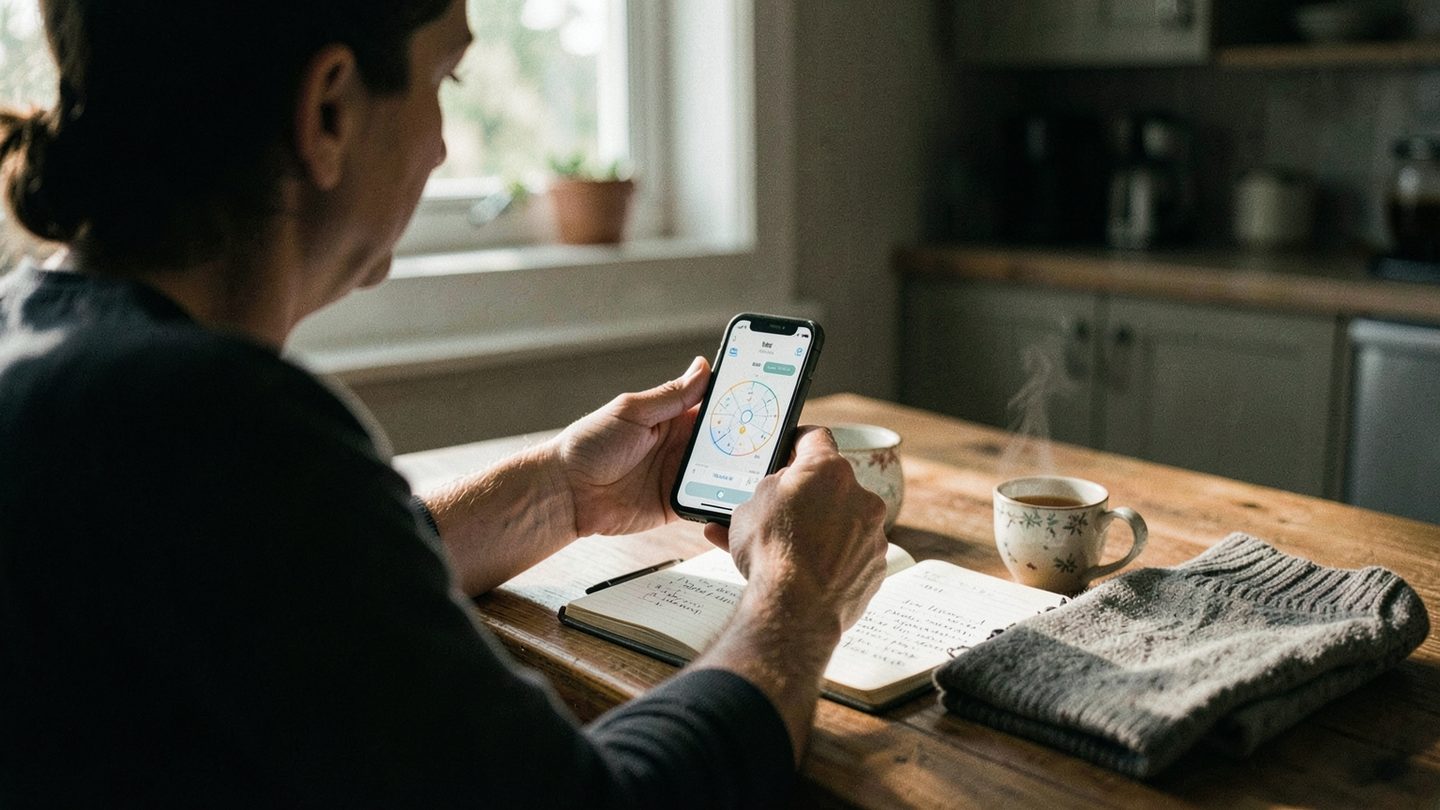
You have the three-question test now, but to answer it properly you need your actual chart — not a Sun-sign horoscope. That's what the free birth-chart calculator is for. Enter your birth date, birth time, and birth location, and you get a full wheel: every planet, your rising sign, and all twelve houses.
Birth time matters more here than anywhere else in astrology. Without it, the calculator can't place your 7th house or identify its ruler, and both are central to this pattern. An approximate noon-time chart is a working guess, not your measured chart. If you can, dig out the exact time from your birth records.
Once your chart is saved, check three things. First, your Venus sign — your relationship operating system. Second, the ruler of your 7th house and the sign it sits in, which shows how you negotiate when a partnership feels at stake. Third, any hard aspects to Venus, especially squares from Pluto or Saturn. Those are where accommodation turns from a choice into a reflex.
The tool's real value is comparison. Seeing your Venus in Libra next to a 7th-house ruler in a flexible sign makes the pattern legible: not a vague personality label, but a specific description of how you keep the peace and exactly where it starts costing you.
Save your results with a free account so the chart is there when you come back to work through it. A fuller personality report is optional paid depth — the reading you need to spot the trap is free. And if you want to go deeper, this walk-through of the people-pleasing pattern in your chart covers the same placements with more examples.
Questions readers usually have about Venus, Libra, and over-accommodation
If this pattern sounds familiar, you're probably holding a few practical questions. Here are the ones that come up most.
Does Venus in Libra automatically make me a people-pleaser? No — the placement describes a style, not a verdict. It gives you the equipment for diplomacy: you genuinely see every side and you're skilled at harmonizing. Whether that equipment becomes avoidance depends on the rest of the chart. Soft aspects keep peacekeeping chosen. Hard ones, like a square from Pluto or Saturn, make it reflexive. The placement is the instrument; the aspects tell you how you play it.
What if I don't have Venus in Libra or Libra anywhere obvious? The trap can still run through other wiring. The ruler of your 7th house is a major one — whichever planet rules your partnership house shows how you negotiate when a relationship feels at stake. A hard aspect to Venus from anywhere in the chart can bend peacekeeping into erasure. You don't need a Libra placement to have the pattern, and you can explore that angle in the guide on how the peacekeeping instinct backfires in relationships.
Can a hard aspect change? The aspect itself is fixed — the square you were born with stays in your chart. What changes is your relationship to it. Venus square Saturn can read as duty you can't refuse, or as a structure you build deliberately. Venus square Pluto can read as fear that stating a need breaks the bond, or as the depth you bring when you finally say it. The chart shows the wiring; you choose what runs through it.
How do I know this is actually me and not a description I talked myself into? Go back to the cost checklist. Resentment after you smooth things over, vagueness about your own preference, fatigue after social time. If those recur, the pattern is yours to work with. If you can't find the evidence, the signature describes a capacity — a mediator's skill you can reach for — not a sentence you have to live under.
Sources
- NASA: Chapter 2: Reference Systems
- IAU FAQ: Zodiac constellations
- NASA GSFC: The Path of the Sun, the Ecliptic
- Astrology.com: Venus in Libra Traits & Meaning
- Astrodienst Astrowiki: House Seven
- Astro.com: Transits of the Year — Venus square Pluto
- mindbodygreen: Venus Sign: What Your Venus Can Tell You About Your Love Life
- Allure: Libra Zodiac Sign: Personality Traits and Sign Dates
This article treats astrology as interpretation, not measurement. NASA and the IAU define the ecliptic and zodiac constellations astronomically; personality claims are a separate, interpretive layer. No birth-chart calculations were used to name a specific shortlist of signs here — the pattern described applies to anyone whose chart carries a Libra, Venus, or 7th-house signature. Houses and angles require an accurate birth time; a birth date alone cannot confirm them.