Lead with the fork in the road: harmony, avoidance, or earned diplomacy?
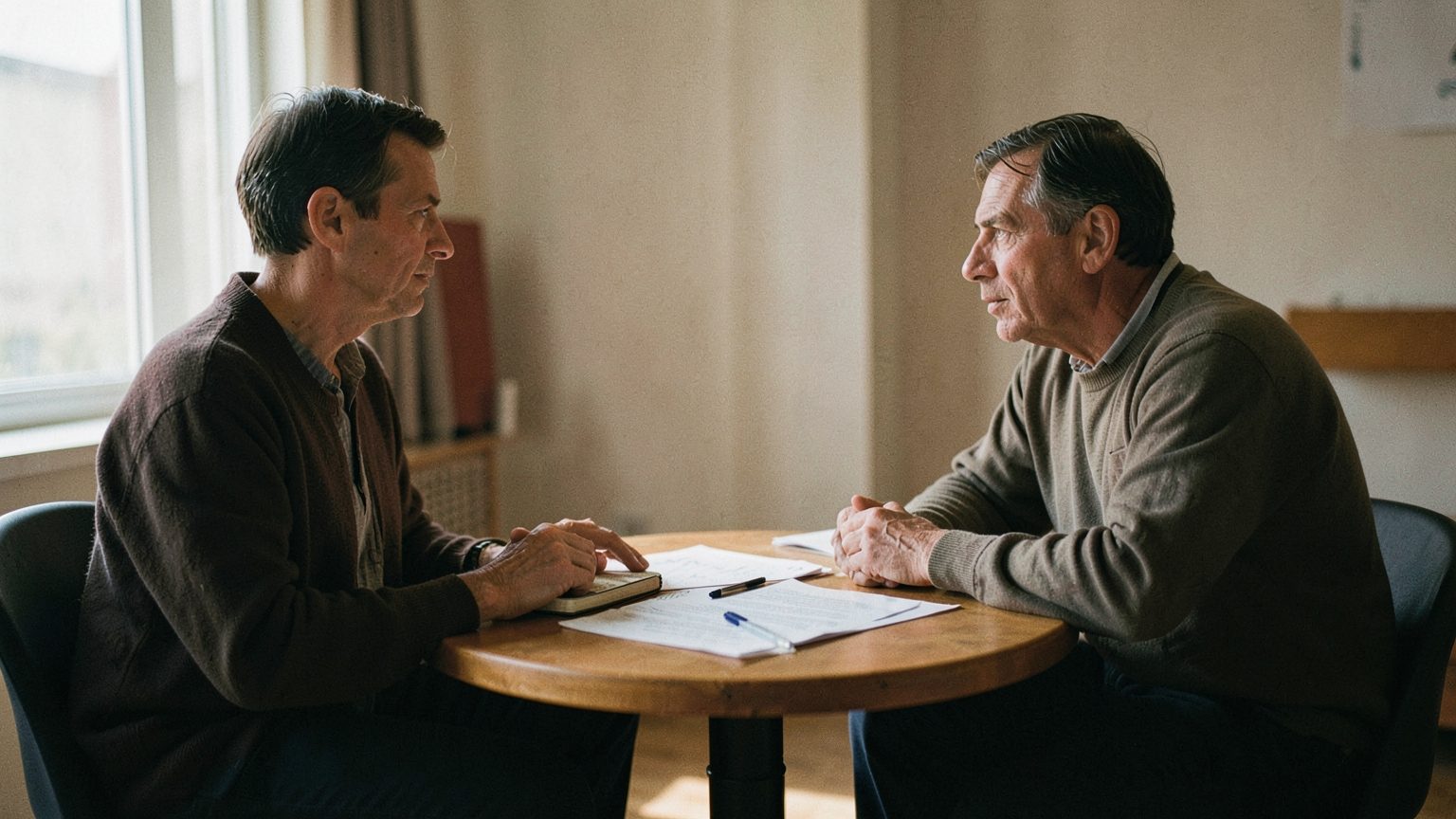
The fork appears the moment someone pushes back. A partner wants to change the weekend plans. A coworker asks you to take their late shift. A friend says something that stings. Your first reflex is to smooth the air — and that reflex is not the problem. Everyone with a peacemaking chart has it. The question is what happens in the next three seconds. Do you restate your position, or does your answer soften before you finish the sentence?
Your body tells you first. When accommodation fires, you hear yourself agree and then wonder where your position went — the voice drops, the edge rounds off, the word actually turns into well, I mean, if that works for you. Genuine diplomacy does the opposite: it feels the tension, sits with it for one breath, and then chooses the sentence on purpose rather than by reflex.
Name the difference in your chest. Accommodation feels like bracing — a tightening that happens before the other person even responds. Diplomacy feels like a pause, a weigh-up with your own need still on the scale. One surrenders before the fight starts; the other makes a decision with the fight in the room.
Your chart names which reflex you were handed. Run your birth chart and the pattern shows up in three places: your Venus sign, what your 7th-house ruler believes the bond costs you, and any square or opposition from the Moon or Pluto. Find that signature and you can catch your answer before it softens — because the choice happens in the three seconds after they push back, and that is the only moment you can change.
What to look for in a saved chart: Venus sign, 7th-house ruler, and hard aspects to Moon or Pluto
Open your saved chart and find Venus first. Her sign names what harmony means to you — the flavor of your peacekeeping, not whether it costs you. Venus in Libra weighs both sides before she speaks; that is the diplomat's reflex. Venus in Taurus smooths conflict by staying patient and warm. Venus in Aries states her piece fast, then wonders why the room went quiet. The sign is your style. It never tells you whether you fold.
The 7th-house ruler is the second clue. The 7th house is the territory of the other person — the partner, the contract, the one-to-one bond. Its ruler shows what you believe you must trade to keep that bond alive. If the ruler sits in a water sign, you absorb the other person's mood before you speak. In an earth sign, you dress the compromise in practicality and call it fair. Both can be peacemaking. Both can be folding wearing a mature face.
Now check the hard aspects. A square or opposition from the Moon to Venus is the clearest accommodation signature: your emotional needs and your need for harmony pull in opposite directions, so you swallow your own reaction to steady the room. Pluto raises the stakes, turning every disagreement into a power struggle. You surrender before the fight starts, because conflict feels like a threat to survival, not a normal part of a relationship.
That is where diplomacy turns into folding. A pressured Venus and 7th-house ruler describe the instinct to keep the bond intact; the square or opposition marks the exact spot where that instinct starts to cost you. Check your Venus sign first for a quick read, then pull the full birth chart for the aspects around it. Once you see which pressure point you carry, you can name what you are actually afraid of — and decide whether the sentence you are softening is worth protecting.
Why Libra and the 7th house can look similar but are not the same thing
Libra and the 7th house both fix their gaze on the person across the table, which is why they blur together. But they answer different questions. Libra is a sign, a way of moving through a room: it weighs both sides, hunts for fairness, and feels the temperature shift before anyone speaks. The 7th house is a place on the chart, the territory of your one-to-one bonds — the partner, the contract, the promise you made. Venus rules Libra, and tradition also hands her the 7th house, so the two naturally blend. In your chart they stay separate.
You can carry Venus in Libra with a quiet 7th house: you weigh both sides easily, yet your compromises stay small because the bond itself is not under pressure. You can carry a loud 7th house with Venus in Aries: your instinct is to state your piece fast, but the house keeps pulling you toward partnership, so you learn to soften. And if Libra also shows up in your Sun, Moon, or rising, the repetition makes the harmonizing drive louder still.
That is the fork between a gift and a habit. When the smoothing is instinct, it costs you nothing and you give freely. When it is accommodation, you are paying for the bond with your position — and you never say the price out loud. At the next disagreement, speak the cost as a line item: if I say yes, I lose my weekend, and that matters to me. The bond that survives that sentence is real. The one that does not was never a bond — it was a transaction.
Alternative explanations for over-accommodation, including Moon stress and Pluto pressure
You checked your Venus sign and your 7th house, and the folding reflex still fires. The habit can live elsewhere: a hard aspect from the Moon or Pluto. Each hides a different fear, and each needs a different untangling tool.
When the Moon squares or opposes Venus, your emotional needs and your need for harmony pull in opposite directions. You do not smooth the air because you weighed both sides fairly. You steady it because your own reaction feels like a risk to the room's safety. A concrete version: you want to decline the extra task, but imagining the coworker's disappointed face makes your stomach drop, so you say yes and call it kindness. You are regulating their mood, not negotiating.
Pluto moves differently. A square or opposition from Pluto to Venus turns every disagreement into a power struggle before anyone speaks. You do not fold mid-conversation; you fold in advance, anticipating the fight and surrendering pre-emptively. The question underneath is not what do I want but what will it cost me if I do not give in. That is accommodation driven by control, not by harmony.
Ask which fear fired. If your own feelings felt too dangerous to speak, that is Moon stress: the tool is letting your needs take up space. If the disagreement itself felt like a threat, that is Pluto pressure: the tool is breaking the habit of surrendering before the fight begins. Both end at the same sentence — state your position before you soften it — but the chart tells you which fear you carry. Run your birth chart and scan for a square or opposition from the Moon or Pluto to Venus. If neither appears, look at the 7th-house ruler instead; it may hold the people-pleasing signature.
How to use the free birth-chart tool to check your placements, save the chart, and decide what matters
The check takes about ten minutes. Open the birth chart calculator and enter your birth date, birth time, and birth location. All three matter. The time places your rising sign and houses, so without it you get a working approximation rather than a full map. And on a day when the Moon changes signs, a date alone can leave your Moon sign ambiguous. Give the tool the whole set.
Then run the three-part check in order. Your Venus sign names your style — how you smooth conflict when it starts. Your 7th-house ruler says what you believe the bond costs you. Then scan the aspect list for a square or opposition from the Moon or Pluto to Venus. That single line is the spot where diplomacy turns into accommodation.
Save the chart with your account before you close the tab. This is a reference point, not a one-time read. The next time someone pushes back and your answer starts to soften, pull the chart up and ask which fear fired. If you also want to see when outside pressure makes the reflex louder, a transit chart shows that too.
Then set one rule for tomorrow. Before your next disagreement, write the sentence you actually want to say. State it fully, hold the silence for one breath, and only then decide whether the compromise still serves you. The chart names the reflex. You supply the sentence.
Common questions: do these placements guarantee people-pleasing, conflict avoidance, or bad relationships?
No — and that answer matters more than the placements themselves. Venus in Libra, a strong 7th house, and a hard aspect from the Moon or Pluto describe your instinct and the fear underneath it, not your verdict. A chart heavy with accommodation signatures is a map of default settings, not a life sentence.
People-pleasing is a behavior you repeat, not a fate stamped on your chart. The same Venus in Libra that folds in one argument negotiates cleanly in the next; which one fires depends on the fear driving the moment. Spot the fold early and you can let the negotiation finish instead of trading your position for the other person's comfort.
Conflict avoidance works the same way. A 7th-house emphasis makes you value the bond enough to weigh the other person's side — that is the gift in the placement. Avoidance is the fear hiding underneath: the belief that stating your need ends the relationship. The placement hands you a reflex you can override, once you catch the moment it fires.
And none of these placements promise bad relationships. What they do is name the exact spot where you are most likely to fold — the coworker's disappointed face, the partner's silence, the fight you feel coming before anyone speaks. That is the whole value of the reading. You cannot correct a reflex you cannot see.
Consider the heaviest case, a Libra Sun - Libra Moon - Libra Rising chart. The harmonizing drive runs so deep it can feel like your personality. The gift is real — you genuinely weigh both sides. The trap is that you start weighing the other person's comfort against your own needs and calling it fairness. Your chart does not decide which wins; you do, in the beat between their words and yours.
So treat what you see as a starting point, not a conclusion. And when the habit starts to cost you, the peacekeeping backfire guide walks through five of those moments. The chart names the decision point. What happens after it is yours.
Sources
- NASA Science — Chapter 2: Reference Systems
- NASA — What Is the Plane of the Ecliptic?
- NASA GSFC — The Path of the Sun, the Ecliptic
- Astrodienst Astrowiki — House Seven
- Astrology.com — Venus in Libra Traits & Meaning in Astrology
- Astrology.com — Venus Planet Meaning in Astrology
- Cafe Astrology — Planetary Aspects
Astrological meaning here is interpretation, not a scientific claim. The ecliptic and zodiac describe astronomy; the meanings attached to signs, planets and houses are astrological readings. Houses and a rising sign require an accurate birth time; a birth date alone cannot confirm them. No event date drives this piece — it is a personal identity reading built around the free birth-chart calculator.