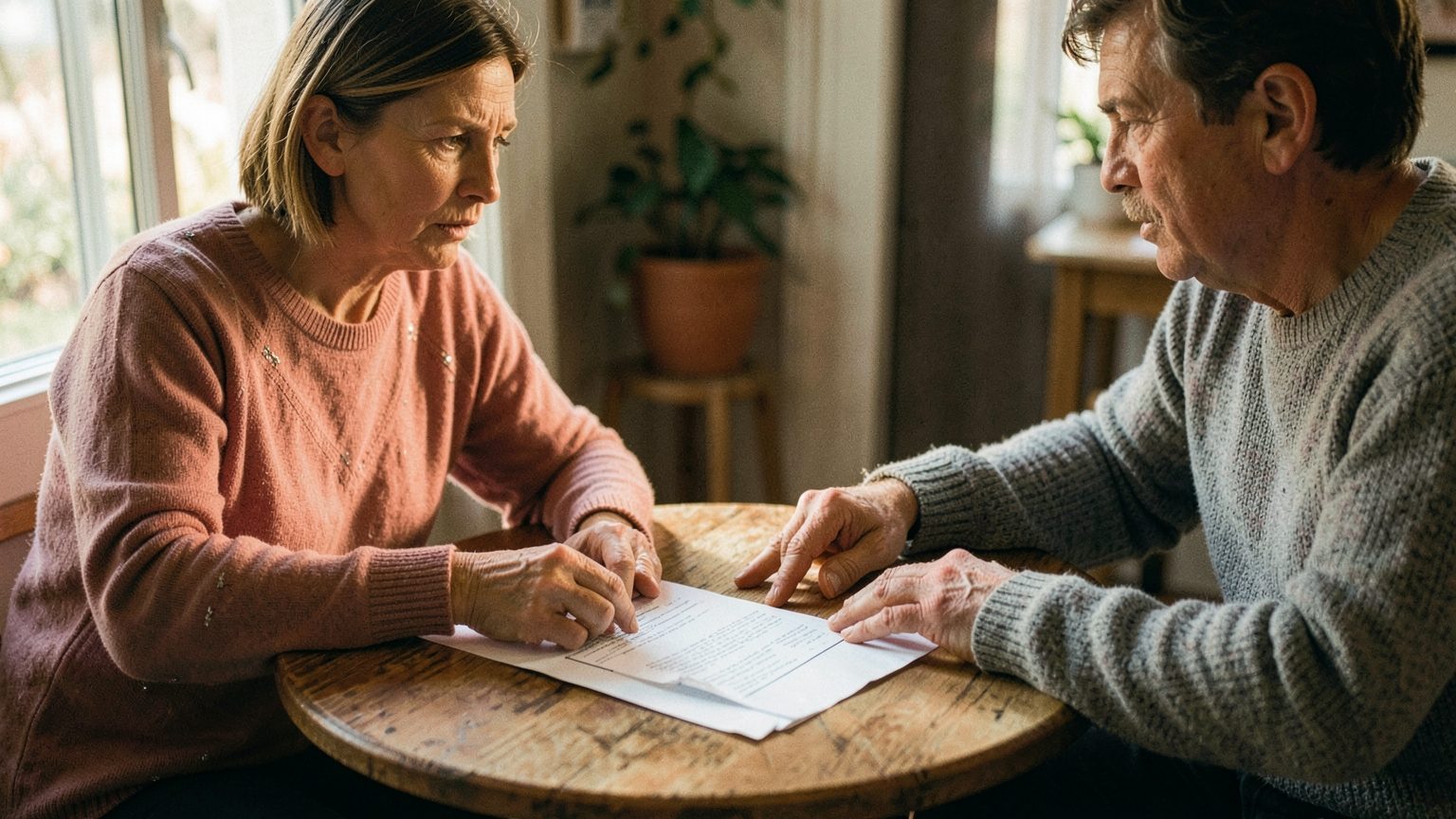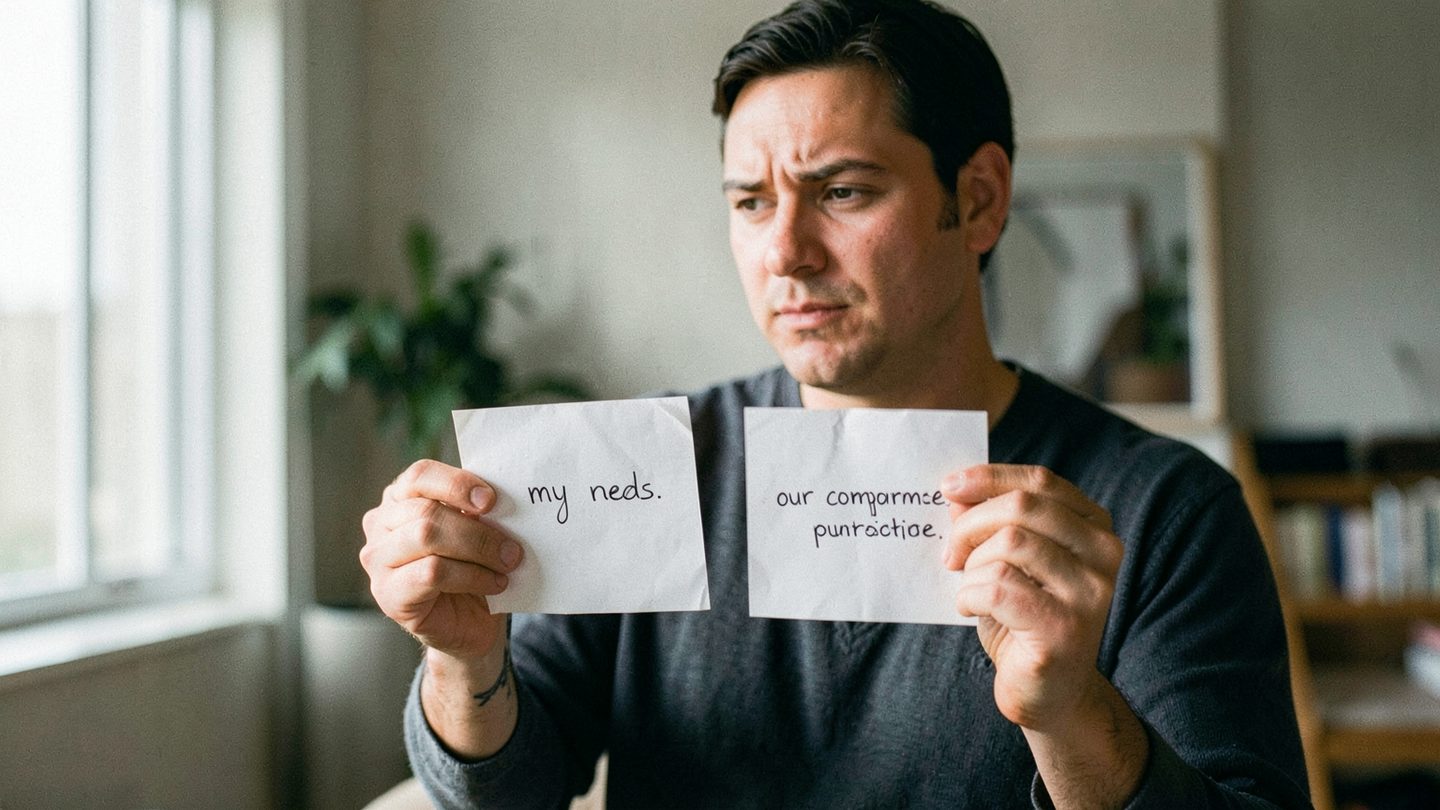
Start with the difference: appeasing to stay safe, or balancing to stay fair?
The tell is what you feel after the conversation ends. A diplomat finishes with a clear head and a workable compromise. A people-pleaser leaves with a knot in the stomach, replaying what they surrendered and promising it will not happen again. Same polite smile, opposite internal result.
Your chart explains which version you run. Venus in Libra and Libra in the 7th house supply the raw material: a genuine gift for seeing both sides, softening conflict, and reading a room. That gift becomes diplomacy when you use it to protect a position you actually hold. It becomes people-pleasing when you use it to dodge the discomfort of being disagreed with.
Hard aspects decide the direction. A square to Venus or Libra creates pressure that demands a choice — you either learn to negotiate under tension or you dissolve under it. An opposition splits your loyalty between your own needs and the other person's, which feels like being pulled in two directions. That same divided pull trains excellent mediators, because you understand both sides intimately. The question is whether you can still choose yourself when the compromise is done.
| True diplomacy | People-pleasing |
|---|---|
| States your position first | Waits to read what is safe to say |
| Holds a no without apologizing | Softens every no into a maybe |
| Leaves with a workable compromise | Leaves with resentment building |
Where the chart points matter most: Libra, Venus, the 7th house, and hard aspects
Venus in Libra gives you the diplomat's toolkit: charm, fairness, and a genuine talent for seeing both sides of an argument. The trap is using that gift to keep the peace at your own expense. A coworker dumps their project on you, and your first instinct is yes — not because you want the work, but because saying no would make the room uncomfortable. Venus in Libra knows exactly what it wants. The struggle is speaking it when speaking might cause friction.
Libra in the 7th house, the house of committed partnerships, doubles down. Your sense of self is tied to how your relationships feel, so conflict reads as a threat to your identity. That makes you genuinely cooperative and skilled at compromise — and quietly terrified of the moment someone is unhappy with you. You can broker peace between your two friends easily. The harder task is brokering peace when you are one of the two friends.
Then come the hard aspects. A square to Venus or Libra works like internal pressure: it forces you to confront whether you can hold a position when someone pushes back. Some people fold instantly, because the pressure feels like danger. Others discover the discomfort is survivable — and that the same tension sharpens their negotiating edge. They can sit inside an argument without abandoning their own side.
An opposition splits your loyalty between your needs and the other person's. It genuinely feels like being torn in two. But that divided pull is exactly what trained the great mediators: you understand both sides intimately, so you can craft a fair deal. The catch is remembering you are one of the sides in that deal. The same chart can produce either pattern — the hard aspects just decide whether the pressure makes you drop your position or hold it.
What astrology can and cannot tell you about relational skill
Your birth chart maps instincts, not outcomes. It can show the raw material: Venus in Libra hands you genuine charm and a talent for seeing both sides of an argument. It can show where that instinct lives, when Libra in the 7th house ties your sense of self to how your closest relationships feel. It can show where the pressure will hit, when a square or opposition touches those points. What it cannot show is whether you folded in last Tuesday's argument, or why. That answer lives in your history and habits, not your planets.
Read your chart as a diagnostic tool, not a verdict. Venus in Libra tells you harmony is your natural default, so ask yourself whether that default is protecting a position you still hold or protecting your comfort. A square to Venus tells you friction will feel like pressure, so ask yourself whether you hold your ground when it arrives. The planet sets the test. It does not grade your answer.
Two people can share the same Venus placement and behave in opposite ways, because the chart describes the equipment, not the operator. One negotiates boldly with that charm; the other uses it to soften every boundary they wish they had kept. The difference is not the planet — it is what you have practiced, what you learned to fear, and what you decided you are worth in a conflict.
The same planet also behaves differently by sign. Venus in Scorpio meets friction head-on, intense and unafraid of confrontation, while Venus in Libra softens and negotiates by instinct. Neither is morally better — each maps a different tendency, and the chart hands you the instinct, not the outcome.
So use the chart to find your pressure points, then practice holding your position inside them. That is where diplomacy gets built.
Practical communication: questions to ask before you call it people-pleasing
Next time you are mid-argument and your instinct says keep the peace, stop before you answer and run six quick checks. They separate the compromise you chose from the one you surrendered.
One: did you state your position before you read the room, or after? Diplomacy opens by naming what you want. People-pleasing opens by scanning the other person's mood and tailoring the answer to it. If you spoke only once you knew which way the wind blew, you were matching, not negotiating.
Two: can you hold a no without apologizing? A diplomat's no is calm, complete, and final. A people-pleaser's no arrives wrapped in 'I'm sorry, but...' and usually gets walked back within the hour. Watch whether your no survives the first push.
Three: does the compromise sit easy or build resentment? Diplomacy leaves an agreement you can genuinely live with. People-pleasing leaves a knot in your stomach that quietly hardens into a grudge — and the grudge, not the original conflict, is what poisons the relationship later.
Four: does your body tighten — chest or voice — before you speak? That is the fear engine, not the diplomat's calm. If your chest squeezes or your voice goes soft the second the room turns tense, you are agreeing to discharge the fear, not because the deal is fair.
Five: can you name one concrete thing you want from this conversation? A diplomat arrives with a specific ask. A people-pleaser arrives with a vague wish that everyone stays happy — which is not a position and cannot be negotiated.
Six: would you still hold this agreement if the other person were unhappy with it? If your answer depends entirely on their mood, the deal was never yours. Diplomacy holds the agreement because it is fair; people-pleasing holds it because the alternative — their disappointment — feels unbearable.
Your chart shows where this pressure bites hardest: a square to Venus makes the moment hot, an opposition splits your loyalty in two. But the answers to these six questions are never in the chart. They are in your practice. Run the checks often enough and you catch the pattern before it becomes a habit.

Explore your own patterns with the free birth chart tool
Run those three checks for a few weeks and you will start spotting your pattern. But you cannot see your own from inside the habit. The free birth chart calculator shows you the exact mechanics: the sign your Venus sits in, the house Libra rules, and the squares and oppositions that decide whether you hold your ground or give it away.
You need your birth date, time, and location. The time matters more than you think: your rising sign, houses, and angles all depend on it. Without a time, the tool works from a noon approximation, so treat house placements as a working guess, not a certainty. If the Moon changed signs on your birthday, your Moon sign stays ambiguous without the time too.
Start with Venus. Note its sign — Venus in Libra, for example, tells you harmony is your natural instinct. Then look at the aspects touching it. A square means pressure that forces a choice between holding your ground and folding. An opposition splits your loyalty between your needs and someone else's. Then find your 7th house: if Libra rules it, partnership tension hits you personally.
Seeing it on your own chart turns the framework into a mirror you can check after every hard conversation. Save your results with a free account so the map is waiting when you need it. If you want a deeper read on how your Venus and Libra placements shape your relationships, a personality report pulls the whole picture together.
Sources
Astrological placements describe tendencies, not measured traits. Finding your Venus sign, 7th house, and aspects requires your exact birth date, time, and location; a birth date alone cannot determine houses or a rising sign. Use the free birth chart calculator to check your own placements — the six checks here are a practical framework for self-observation, not a diagnosis.