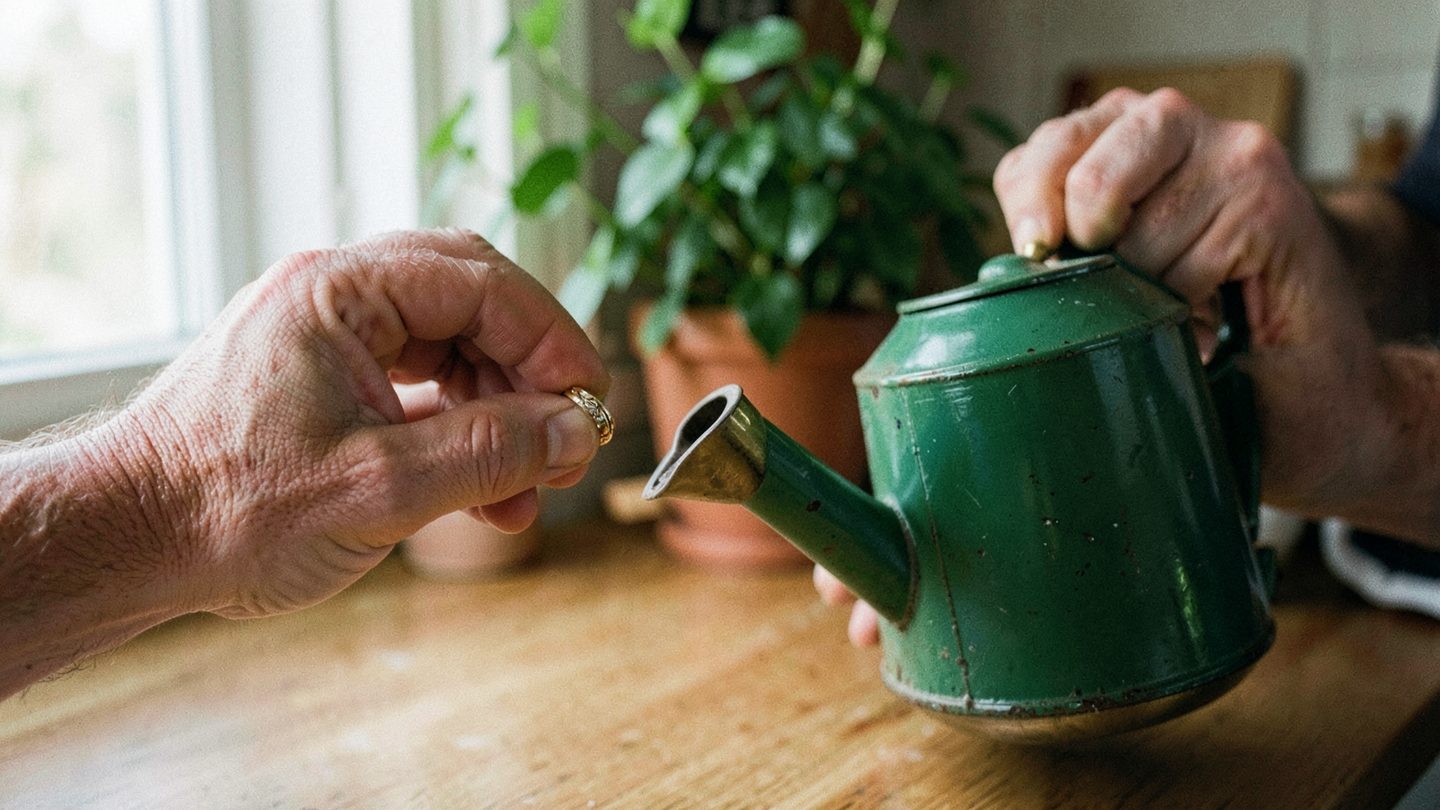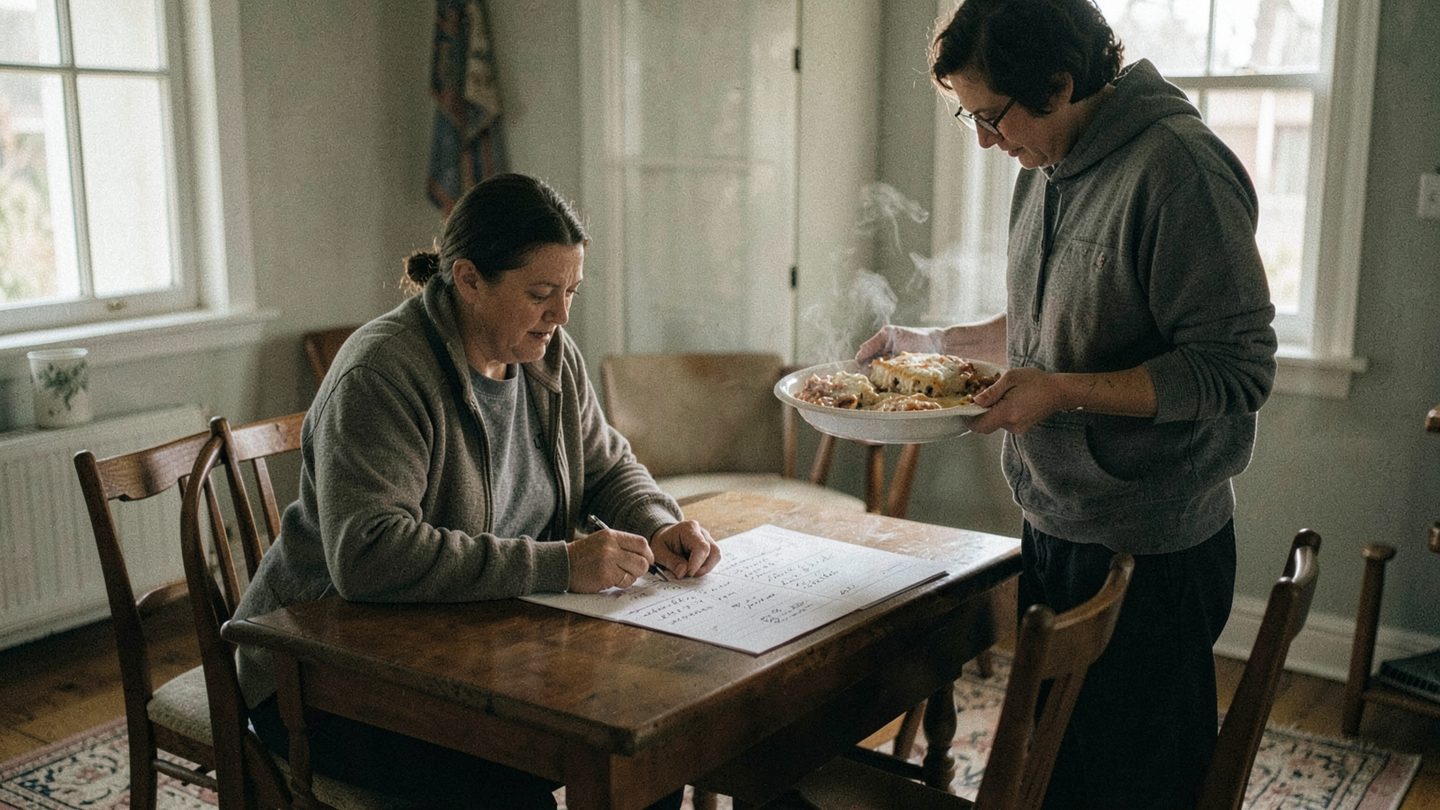
The central theme
Juno is the asteroid astrologers link to committed partnership — the terms two people agree to, and the dignity each expects inside those terms. Ceres, the dwarf planet, carries nurturing, feeding, mothering and the practical business of care. A square sets them 90 degrees apart: close enough to touch, far enough to argue. That geometry is the whole story. Commitment and care need each other, and in this aspect they keep arriving at the negotiating table with different demands.
You feel it as a recurring dispute about what love is supposed to look like. One partner keeps the calendar, pays the bills, shows up on time, and calls that devotion. The other wants soup delivered, a hand held through a hard week, permission to fall apart. Both are being generous. Neither feels fed.
The word "square" needs a clear definition, because it is often thrown around as a vague synonym for bad. A square measures separation on the 360-degree zodiac wheel. An exact square is 90 degrees. A square with some slack is still a square.
Here is the arithmetic. Take two planetary positions at 15 degrees and 107 degrees of the same circle. The shortest distance between them is 92 degrees. The square's reference angle is 90 degrees, which leaves an orb of 2 degrees — a tight square by most standards. That 2-degree gap is the friction: too near the ideal angle to ignore, too far to sit comfortably.