In synastry, the same axis gets a face. One person's Chiron lands on the other's Pallas, or the two placements sit across from each other between the charts. What was an internal debate becomes a dynamic between two people who love each other and keep missing.
This is one of the clearest examples of opposition aspects between two charts—the kind of polarity that pairs two people rather than splitting one person.
The common shape: one person brings the raw material—the old hurt, the sore spot, the thing that still stings. The other brings the solution. And the solution arrives too fast.
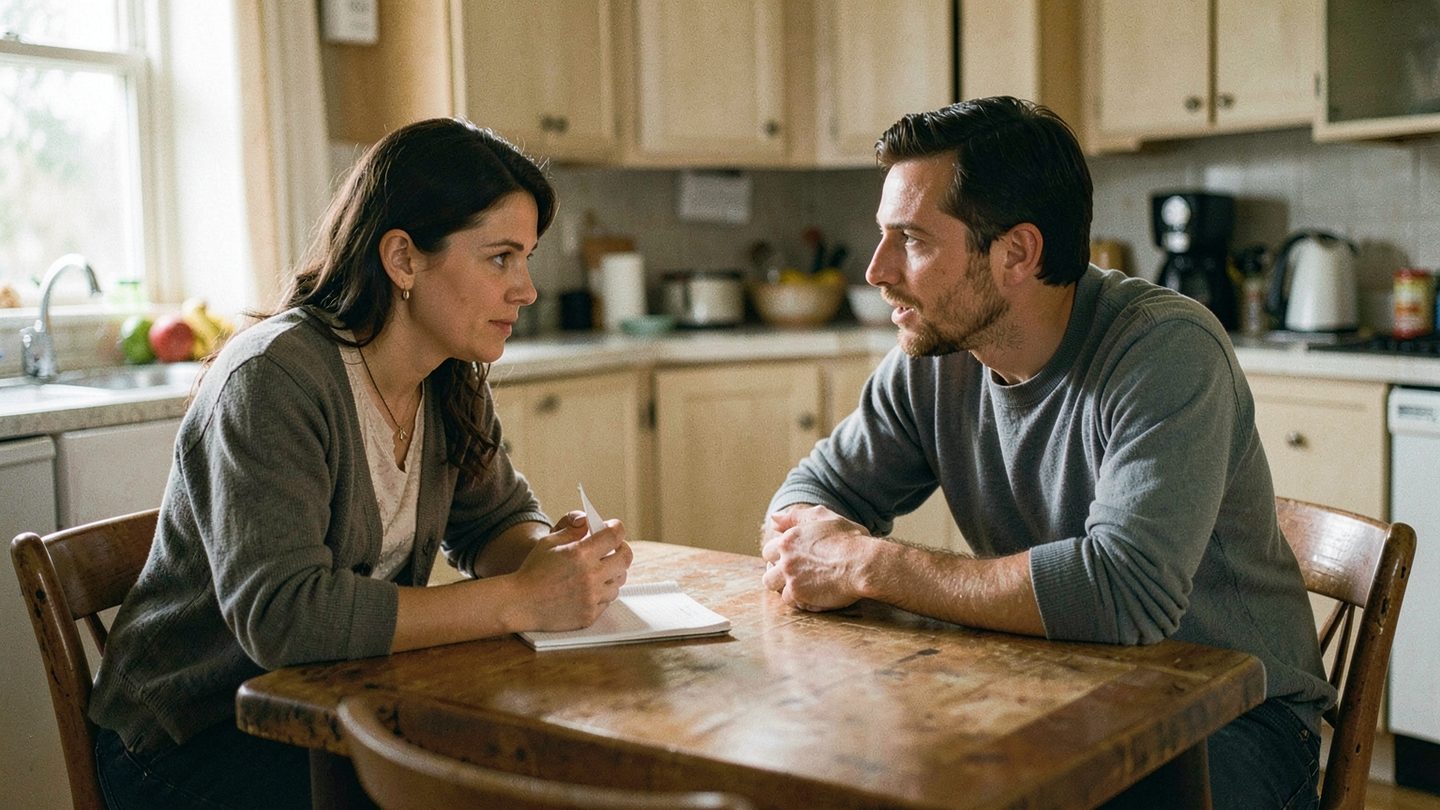
Picture a couple after a hard week. She says, I felt invisible at that dinner. He says, next time we'll leave earlier and I'll sit on your other side. Every word is reasonable. She hears: your feeling is a logistics problem. He hears: nothing I plan is ever the right answer.
That is the trap of this pairing. Pallas does not intend to dismiss. Pallas is doing what Pallas does—converting pain into a workable item. Chiron does not intend to reject help. Chiron is asking to be witnessed before it is scheduled.
Flip the roles and the same friction appears. The Chiron-dominant partner collapses into the wound and treats every suggestion as proof they are not understood. The Pallas-dominant partner grows exhausted, then cold, then certain the other person refuses to get better.
Here is why it hits harder between two people than inside one. In a natal chart both voices belong to you, so nothing gets externalized—the argument stays quiet. In a relationship the two ends live in separate bodies. The tension has a name, a tone of voice, and a history of past fights.
The loop is predictable. Wound speaks. Tactic answers. Wound feels managed. Tactic feels unappreciated. Both walk away convinced they were the reasonable one.
Break it by assigning jobs instead of arguing about who is right. The Chiron side names what it needs—witness, not repair, at least for the first ten minutes. The Pallas side asks one question before offering anything: do you want me to listen, or do you want me to help?
That single question defuses most of the aspect. It hands Pallas a legitimate task and gives Chiron permission to be met before being fixed.
Two cautions worth keeping. First, a sign-to-sign comparison is not an aspect. Real synastry contacts are measured between calculated planetary longitudes, so check the actual degree distance before you decide a couple has this opposition. Second, this aspect describes a dynamic, not a verdict. It shows where two people keep stepping on each other, and it bends the moment either one changes the sequence.
Also watch for projection. The partner who cannot feel their own wound will happily diagnose the other's. The partner who cannot strategize will call the other controlling. Both accusations are the aspect talking, not the truth.
When it works, this is one of the most useful pairings on the board. One person supplies the depth and the honesty about what hurts. The other supplies the route out. The pair becomes formidable—provided the route is offered after the wound has been heard.