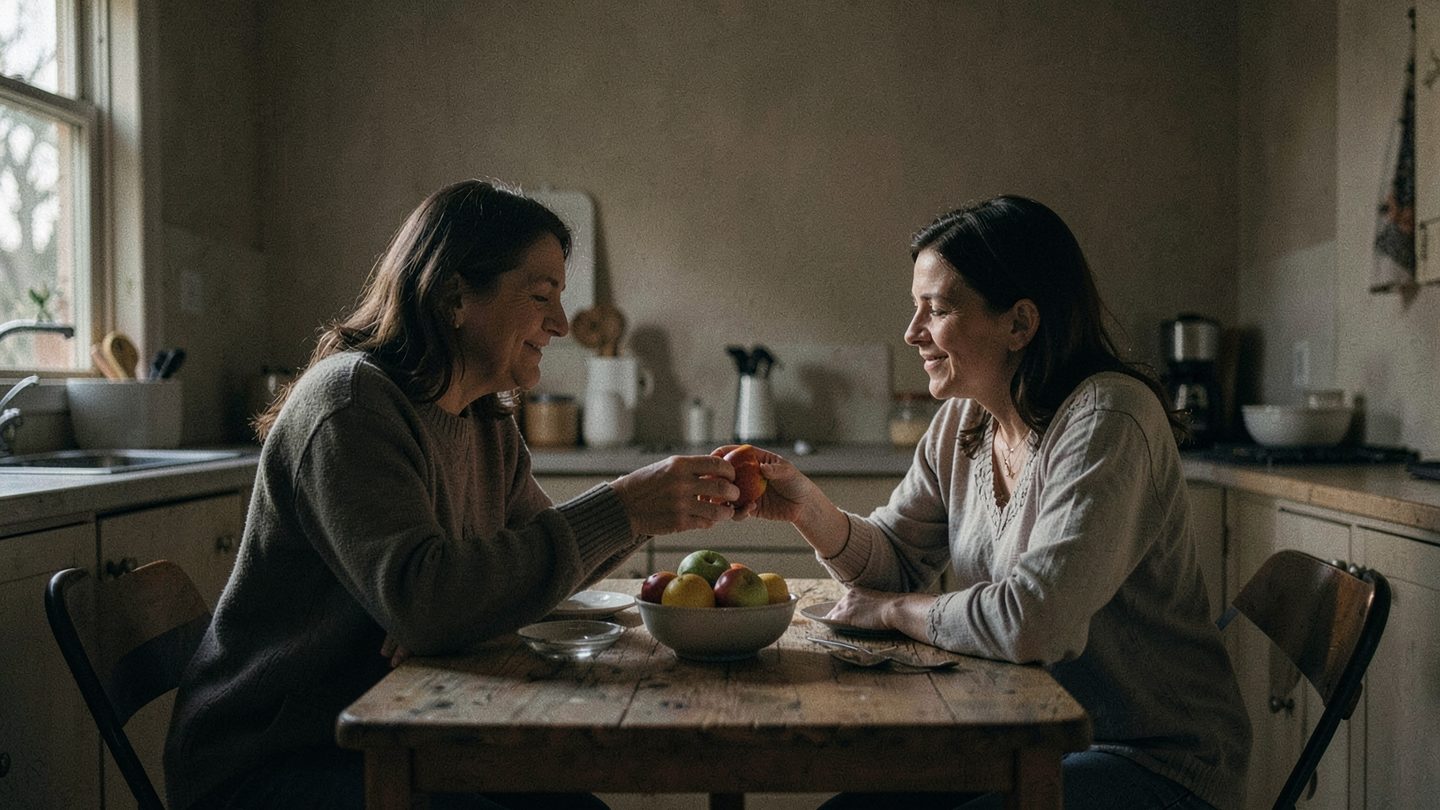
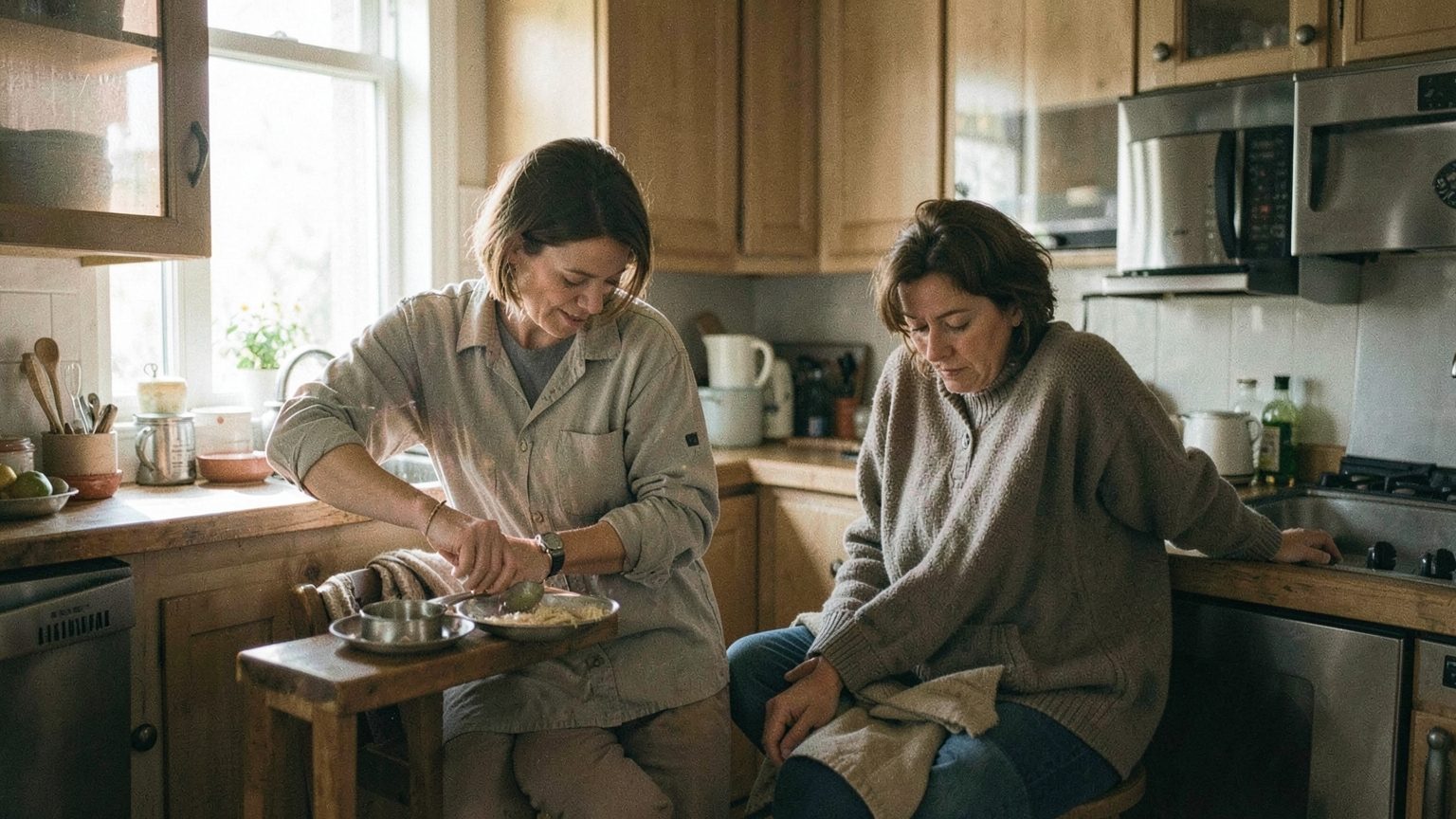
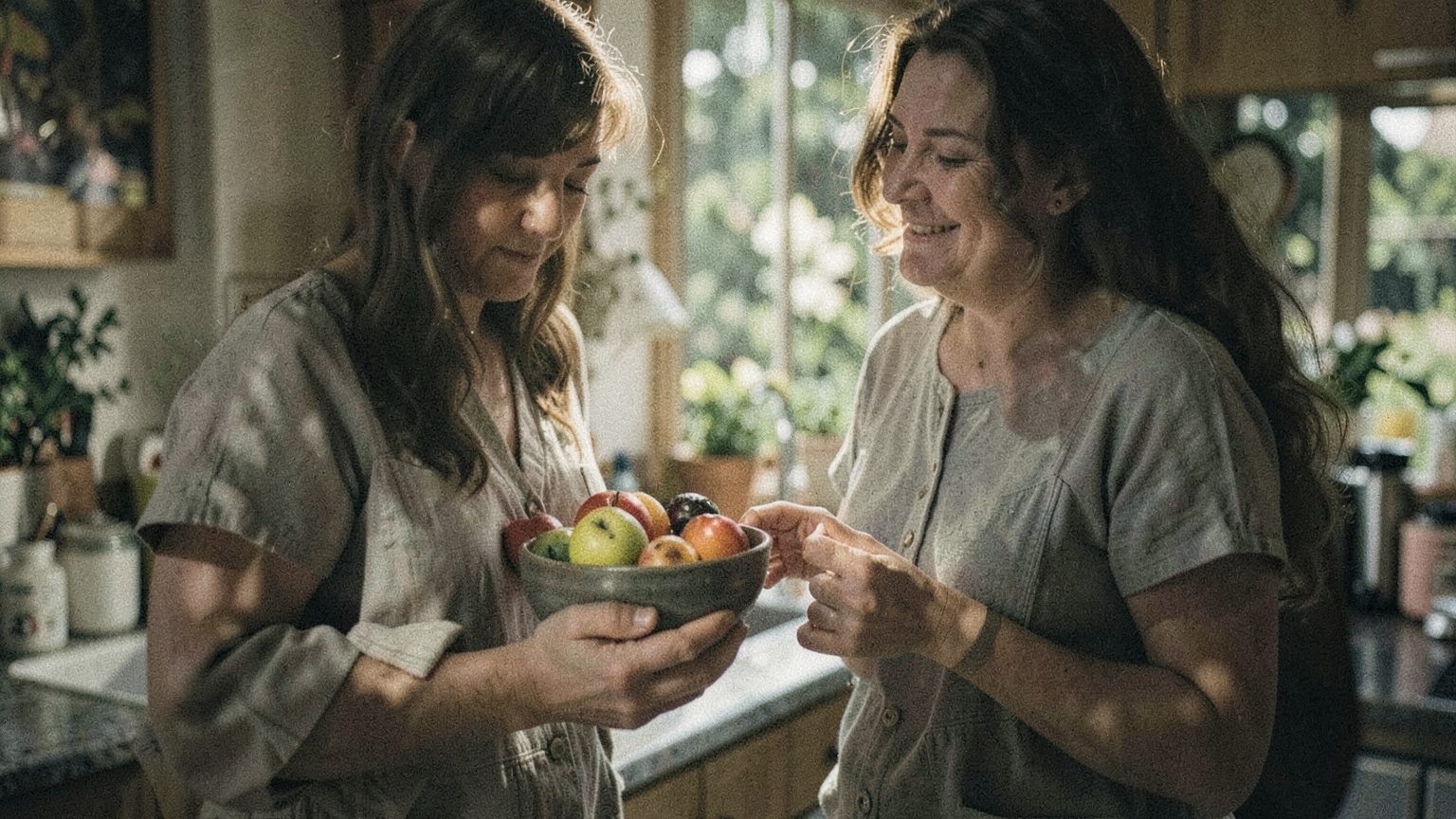
Abstract care is easy to agree with and hard to picture. This aspect shows up in ordinary, physical moments — the ones nobody plans and everybody remembers.
Home is where it moves fastest. You walk in, read the room in three seconds, and adjust the light, the radio, the temperature. Nobody asked. Nobody noticed you did it. That is the sextile working: feeling and tending fused into one reflex. The risk is that you become the thermostat for a whole household and no one ever checks the temperature of your day.
Food is the same story with cutlery. You cook what someone can actually eat on a bad day — soft, warm, plain. You notice who is not eating and you put something in front of them without commentary. The Moon is the hungry body; Ceres is the plate. When this channel runs one way for years, you end up knowing everyone's preferences and nobody knows that you cannot stand mushrooms.
Family is where the same reflex meets the past. In this aspect the caregiving pattern often mirrors a role you took on early — the steady one, the one who smoothed things over. You brought soup to the arguments. You were the child who checked whether everyone was all right. That habit is portable, and it travels straight into adult partnerships.
Emotional repair is the strongest use of this placement. Fights do not need a long post-mortem with you; they need a warm gesture. You say let us eat, and the argument softens. The repair works because the Moon responds to safety cues faster than it responds to logic — and you deliver those cues naturally.
At the roots, this is the same instinct that Ceres sextile the Imum Coeli describes: care turned into shelter, food, and family safety.
Here are three concrete moves that turn the talent into something built to last.
First, name one need before you meet someone else's. Say it plainly, without packaging it as a favour to them. I need twenty quiet minutes. This is not about you. I would like to be asked first.
Second, add one sentence after the gesture that the gesture cannot carry. Here is dinner, and I am tired too. You are welcome, and I need something back this week. The care stays. The silence ends.
Third, ask for a turn out loud. Who is looking after me tonight? Not a complaint — a request. For a placement this fluent, the ask is the skill worth practising, and a birth chart calculator shows which house this pattern lands in, so you know exactly where the request should go.
Notice what these examples have in common. Every one of them is a favour you do not have to be asked for, and a need you do not have to announce. The first half is a gift. The second half is the deliberate part, and it is yours to add.
A final example, the one most people recognise. You remember a friend's hard anniversary and text that morning. But if you tell them your own hard week went unnoticed, and they say they had no idea — that is not proof they do not care. It is proof that you have been feeding everyone except yourself.
So aim the care inward. On the days you cook for the house, cook something you like. When you notice someone's mood, notice your own in the same glance. It is the same talent, finally pointed in both directions.