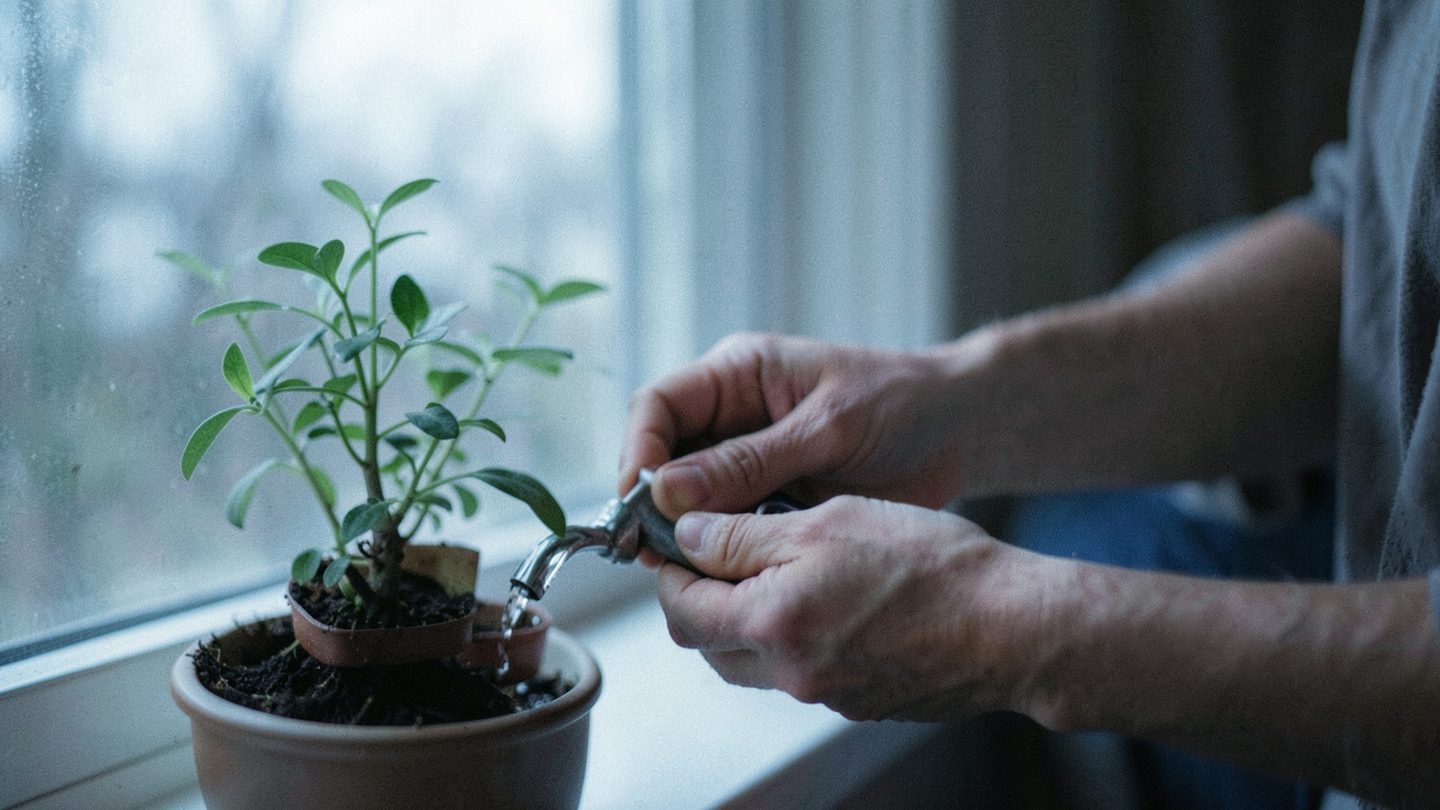
The central theme: care, idealization, and porous boundaries
Start with what each body actually means. Ceres carries nurture in its most ordinary form: the meal you cook when someone is sick, the rent you quietly cover, the way you notice a friend has gone quiet. NASA describes Ceres as the only dwarf planet in the inner solar system and the largest object in the asteroid belt — a real body with water ice and salts, orbiting between Mars and Jupiter. Astrologers read it as the instinct to feed and protect, and Cafe Astrology ties it to caregiving, food, gardening and everyday sustenance.
Neptune does something else entirely. NASA's fact sheet is blunt: Neptune is an ice giant with no solid surface, an atmosphere of hydrogen, helium and methane, and a hot fluid interior. Nothing to stand on. Astrologically that matches the symbolism — compassion without a ledger, music, devotion, illusion, the urge to merge with something larger than yourself.
Put them together in a conjunction, an aspect where two bodies sit at the same degree of the zodiac wheel, and care loses its edges. You don't just help someone; you become their rescue. You don't just love them; you merge with their mood and forget which feelings started where.
That is the whole theme in one sentence: practical devotion meeting a planet with no ground floor. The generous version is radiant — a hospice nurse, a soup kitchen volunteer, a musician who feeds a whole room with one chord. The costly version is self-erasure dressed up as kindness.
A tight orb sharpens this. When the two points sit within a degree or two, the diffusion is woven into daily life rather than occasional. A wider orb makes it a background hum, triggered mostly by transits and hard aspects.
One clarification that matters for everything below: a sign's 30-degree sector is not a measured aspect. Real aspects come from calculated planetary longitudes, which is why the same conjunction lands in a different house for every chart. That house, not the sign, is what turns a general theme into something you can point at in your own week.
In a natal chart: what it can say about how you nurture and escape
A natal Ceres-Neptune conjunction describes someone whose instinct to care arrives soaked in feeling. You sense what a room needs before anyone speaks. You remember the person who looked tired at the party, the colleague whose voice dropped on a call. That radar is real and it is useful.
It also has a cost. Your own needs get blurry next to everyone else's. You may take on the rescuer role without noticing the moment you accepted it, then wonder why you feel emptied out by people who never asked you for anything.
Watch where it shows up in daily life. You might be the one who always hosts, always drives, always remembers the birthdays — and quietly resents it. Or you give in ways nobody can reciprocate: money with no paper trail, hours with no record, support for a project that never launches.
There is an escape hatch built into this aspect too. Neptune offers relief from the heaviness of caretaking, and it arrives as fantasy. Food can become comfort instead of nourishment. Daydreaming can replace action. Just as often, the escape is service itself: you stay busy caring for others so you never have to sit alone with what you feel.
Notice the language you use. Ceres-Neptune natives often say "it's easier if I just do it" or "they need me more than I need anything." Both lines turn a limit into a betrayal of your own kindness.
Where the conjunction falls changes the flavour. A Ceres in 6th house placement bends toward health, work and routine, with a body that absorbs other people's stress. Ceres in 4th house points to the family you grew up in and the role you inherited there. Ceres in 10th house builds a public identity as the one who holds everyone together.
Sign matters less than house here, but it still colours the texture. Mutable sign placements dissolve fastest under pressure and usually need a written schedule to hold a boundary. Fixed sign placements push back and hold the line longer, but when they finally give, they give everything at once.
Here is the first real test. Pick one relationship and ask what the giving produces. If your care leaves both of you more capable, more rested, more able to say no — that is the aspect working well. If it leaves one of you smaller, that is the leak.
In your own chart, you are both giver and dreamer at once. The Ceres side keeps handing over the meal, the lift, the money. The Neptune side keeps imagining that this endless giving is devotion rather than depletion. The next section pulls those two roles apart: what happens when one person's Ceres meets another person's Neptune.
Between two charts: when one person feeds the dream and the other feeds the need
Put one person's Ceres next to the other person's Neptune and the roles split fast. One of you becomes the provider — the meals, the lifts home, the steady emotional ground. The other becomes the dream, the muse, the person whose moods the whole relationship organises around.
Direction decides what the bond feels like. If your Ceres lands on their Neptune, you are the one giving and they are the one being idealised, or idealising you back. You carry the practical weight and they carry the atmosphere. If their Ceres lands on your Neptune, the current runs the other way: you idealise their care until ordinary kindness feels like salvation.
When both people have a strong Ceres and a strong Neptune touching the same degree, the loop closes. Each rescues, each dissolves, and neither can name who needed what first. That is the mutual-rescue pattern people describe as a soulmate connection — and the reason it so often ends with one person exhausted and the other baffled.
The tell is in the verbs. Healthy care looks like "I brought dinner, I'm leaving at nine." Fused care looks like "I brought dinner, I stayed until two, I fixed their argument with their sister, I'm still here." Same dishes, different planet.
Kerykeion's synastry reading of Ceres-Neptune lands on mutual idealisation: emotional validation so complete that the support itself becomes the bond, and the bond becomes the thing nobody wants to test. Naming a limit is the test. Watch what happens when you say no.
In most cases, a partner accepts the limit and the relationship adjusts. In the fused version, the no lands like abandonment. You get urgency, hurt, a sudden crisis that needs solving tonight. If that happens every time you set an edge, you are not in a relationship with a person. You are in one with a rescue.
There is a fair version of this. Two people who actively practise something together — a garden, a band, a meditation group, a shared kitchen — pour the Neptune into the practice instead of into each other. AstroMatrix describes the aspect as care dissolving into symbol, and that is exactly the move: give the dream a container it can live in.
Read the house each planet occupies next. Your Ceres in the 6th and their Neptune in the 4th means you serve and they nest. Your Ceres in the 10th and their Neptune in the 7th means you provide and they romanticise partnership — the classic Neptune in 7th house setup, where the idealisation attaches to the bond itself rather than to either person. Same conjunction, different marriage.
That is the answer to the direction question. Find the planet each person owns, then find the room it sits in. The provider-dreamer split is written there, and it shifts the moment either of you changes a routine.
To see the split laid out side by side, run both sets of birth details through the synastry chart calculator. It shows whose Ceres meets whose Neptune, the orb between them, and the house each point lands in. The house is what turns a general theme into a specific answer about who carries the weight.
As a transit: when the mood turns tender, foggy, or savior-shaped
A Ceres-Neptune transit takes the natal theme and paints it across a stretch of weeks or months. Ceres moves slowly through the zodiac, so when it meets Neptune by conjunction — or squares, opposes or trines it — the influence lingers rather than flashing past in a day.
Here is what that feels like on the ground. Your empathy turns up without a volume dial. A stranger's bad day follows you home. You cry at a commercial, forgive someone who has not apologised, and start saying yes to requests that should have been a clear no.
Watch the saviour shape arrive. This is the transit that produces rescues: the loan you make to someone who has never repaid a loan, the job you take because the team is falling apart, the relationship you revive because the other person is fragile. Neptune supplies the story. Ceres supplies the effort.
Food, rest and body care get slippery too. You might comfort-eat, skip meals while caring for someone else, or sleep in strange patterns. Neptune in the mix blurs signals — genuine tiredness reads as laziness, real hunger reads as boredom, and your own anger reads as nothing at all.
The useful version of this transit is extraordinary. Compassion widens beyond your usual circle. You might volunteer, make art about tenderness, pray, sing, cook for people who cannot cook for themselves. Neptune adds beauty and meaning to acts that would otherwise be ordinary chores.
Ask yourself two questions at the start of the transit and again two weeks in. Who did I rescue without being asked? What did I give up that I never named out loud? The gap between those answers is the aspect's footprint.
Keep a written list if it helps. Ceres-Neptune transits are famous for making one generous act feel obvious in the moment and invisible three weeks later, which is exactly how burnout gets built without anyone noticing.
Timing note: because this aspect is slow, the transit can shape a whole season rather than a single event. The same fortnight might hold your most tender, generous moment of the year and your most drained. Both belong to the same sky.
The exhaustion-versus-devotion question has its answer here. Sign, house and aspect company redirect the theme — a mutable sign placement diffuses under pressure, a fixed one holds shape, and whichever house Ceres sits in becomes the room where the rescue happens. Ceres in the 6th tips toward service and body depletion. Ceres in the 4th tips toward family. Ceres in the 10th builds a caretaker reputation you now have to maintain.
Use the free transit chart calculator to enter your birth date, birth time, birth location and the target date, and see where the moving planets sit against your natal chart — which house, which planet, which part of your life the conjunction actually touches.
A full monthly forecast takes more than one date, and the tool shows you one moment at a time. Run it for the start, middle and end of the transit and you can watch the fog shift.
The boundary question stands: if edges melt, what separates devotion from disappearance? The next section gives you the test.
Practical examples: money, family, work, intimacy, and burnout
Money is where the aspect shows up first, because care with no ledger is exactly how Neptune works. You cover a friend's rent for two months and never mention it again. You lend to a sibling who has never repaid a loan. You pay for the group dinner, again, because asking feels colder than absorbing the cost.
The test is simple. Write down what you gave to one person in the last month — money, hours, favours. Then write down what you have ever said out loud about it. If the list is long and the conversations are zero, Neptune has swallowed the accounting.
Family is the other pressure point. Ceres-Neptune often marks the child who became the parent, or the adult who now manages a relative's medication, moods and money without a job title or a day off. You are the family's weather system, and nobody consults you about the forecast.
Intimacy follows the same physics. You may read closeness as knowing what someone needs before they ask, then feel abandoned when the same effort is not returned. It is easy to confuse someone else's appetite for your care with genuine desire for you.
Work delivers the cleanest example. You become the person who absorbs the difficult client, covers the colleague's shift, and trains three replacements without a pay rise. The rescue feels meaningful because it is meaningful. The problem is that meaning never invoices anyone. Left unchecked, this is how a [[Ceres in 10th house]] placement turns a caretaker reputation into a career you cannot resign from — the title arrives, the salary does not.
Burnout here does not look like collapse. It looks like resentment arriving late and quietly. You keep giving because stopping would feel like a betrayal of your nature, and the resentment grows in the gap between your generosity and your silence about it.
Run the payoff check on one situation right now. Compare what the giving costs you against what it produces. Then watch the relationship, not your feelings about it.
There is a tell that is nearly conclusive. A shared creative or spiritual practice that both people feed separately — a garden, a band, a meditation group, a community kitchen — channels the Neptune into something with edges. AstroMatrix describes the conjunction as care dissolving into symbol, and a shared practice gives that symbol a place to live instead of a person to consume.
Set one visible limit this month. A budget line, an end time, a clear no. Watch what happens next. If the relationship adjusts, you have found the healthy version of this aspect. If the no triggers an emergency that only your yes can solve, you have found the rescue.
What changes the interpretation: house, sign, orb, and other chart factors
The same Ceres-Neptune conjunction can describe a hospice worker, a serial rescuer, or a painter who feeds a whole audience. Four things decide which one you get.
House comes first because it names the room where the care happens. Ceres in the 6th house tips this aspect toward service, health and daily routine — you give through work and errands, and your body absorbs the strain first. Ceres in the 4th house points to family and home, so the rescue happens in the kitchen and the group chat. Ceres in the 10th house builds a public reputation as the one who holds everything together, which is far harder to walk away from than a private habit.
Sign sets the pace. A mutable sign placement dissolves fastest under pressure and needs a written schedule to hold an edge. A fixed sign holds shape longer, then releases all at once — the classic collapse after years of being the reliable one. Cardinal placements want to fix the situation outright, which is how the aspect turns bossy instead of kind.
Orb decides how loud it is. The worked example in this article uses longitudes of 15° and 17°, which produces a 2° separation from exact conjunction — tight, meaning the two themes operate as one. A wider orb pushes the diffusion into the background, surfacing mainly when a slow transit triggers it. An exact conjunction rarely lets you meet someone without immediately sensing what they need.
Aspect company reshapes the theme. Add Saturn and the boundaries return, sometimes rigidly; you become the caregiver with a rota and a spreadsheet. Add Jupiter and the generosity inflates past what you can fund. Add Pluto and the rescue turns compulsive — you cannot leave even when leaving is obviously right.
Check where Neptune sits in your chart too, because that is the room where the fog gathers. Neptune in the 7th house pulls the idealisation into partnership itself, so you keep meeting people who need saving. Neptune touching the Moon or Venus deepens the emotional merge.
One input decides whether any of this can be read precisely. Houses and angles require a birth date, birth time and birth location. A birth date alone cannot produce them, and even the Moon sign is ambiguous on days when the Moon changes sign.
Without a birth time, a noon chart is a working approximation. Use it for the aspect and for sign placements, but treat its houses and rising sign as unknown rather than fixed. You will get the theme right and the room wrong.
Calculate your free birth chart to see where Ceres and Neptune actually sit, which houses they occupy, and what else touches them. The aspect means something on its own. Its address is what makes it yours.
If you are reading this between two charts instead, the synastry chart calculator places both people's planets side by side so you can see whose Ceres meets whose Neptune. Both readings depend on the same thing: an accurate birth time. Get that right and the conjunction stops being a mood and becomes a location.
Common questions: is it healing, enabling, spiritual, or just unclear?
Yes to all four, depending on which way the giving flows. That is not a dodge. It is the honest read of a conjunction between practical care and a planet with no solid surface — the same aspect produces a hospice nurse and a serial rescuer, and the difference is behavioural, not interpretive.
Is it spiritual? Often, and legitimately. Neptune adds devotion, music, prayer and the sense that ordinary care is sacred. That register is real. It turns counterfeit only when the spiritual language becomes the reason a limit cannot be spoken. "I'm just a caring person" is the sentence to watch.
Is it unclear? Frequently, yes. Neptune's whole job is to soften signal, so you may not notice the moment you volunteered, the amount you spent, or the hour you left. Three weeks later the generosity is invisible and the tiredness is not. A written record fixes more of this than any amount of insight.
Is it a soulmate connection? It can feel that way, because mutual idealisation is intense and fast. Feeling does not confirm the bond. Behaviour does. When you say no and the relationship adjusts, you have something real. When the no produces an emergency only your yes can solve, you have a rescue loop, and no amount of Neptune will make it mutual.
Can it be fixed? Yes, without killing the magic. Attach a container: a budget line, an end time, a rota, a practice you both feed. Bring Saturn in by structure rather than by rule — a scheduled commitment holds this aspect better than a promise to try harder.
Two placements sharpen the comparison. [[Ceres Conjunct Sun]] runs the same care theme through identity instead of compassion: you nurture because it is who you are, and the limit has to be defended against your own self-image rather than against someone else's need. [[Ceres Trine Moon]] is the easier version of this aspect — care and feeling flow in the same direction, and boundaries cost less to hold.
Where the Moon sits matters for all of this, and the Moon is the one point most likely to stay unreadable. If the Moon changed signs on your birth day and you have no birth time, the sign is genuinely ambiguous — [[moon sign calculator]] needs date plus time plus place to settle it, and guessing splits the reading in half.
One reading rule sits under everything here. Ceres is a dwarf planet in the asteroid belt, and Neptune has no solid surface; the rest is astrological interpretation, which varies by school. Ceres is an additional point in many systems rather than a standard planet. The houses that place this conjunction precisely need a birth date, birth time and birth location, and a Moon sign can stay ambiguous on days when the Moon changes sign.
Seen whole, Ceres conjunct Neptune asks one question and keeps asking it. Can you care for someone without vanishing into them? Answer it with a limit, not a feeling, and watch what happens next week.
Calculation note · Worked aspect calculation — illustrative longitudes
- Conjunction reference angle
- 0°
- Example measured separation
- 2°
- Example orb
- 2°
This numerical example explains aspect geometry. It is not a real natal or relationship chart, a compatibility score, or evidence of a psychological effect.
Sources
Ceres is a dwarf planet in the asteroid belt, not one of the classical planets, and some astrologers work with it while others do not; schools differ, as Cafe Astrology notes. This article treats Ceres-Neptune as interpretation, not measured psychological fact. Conjunctions are usually counted within about 8°; the worked example of 15° and 17° longitudes gives a 2° separation — an illustration of tight orb, not a real chart.