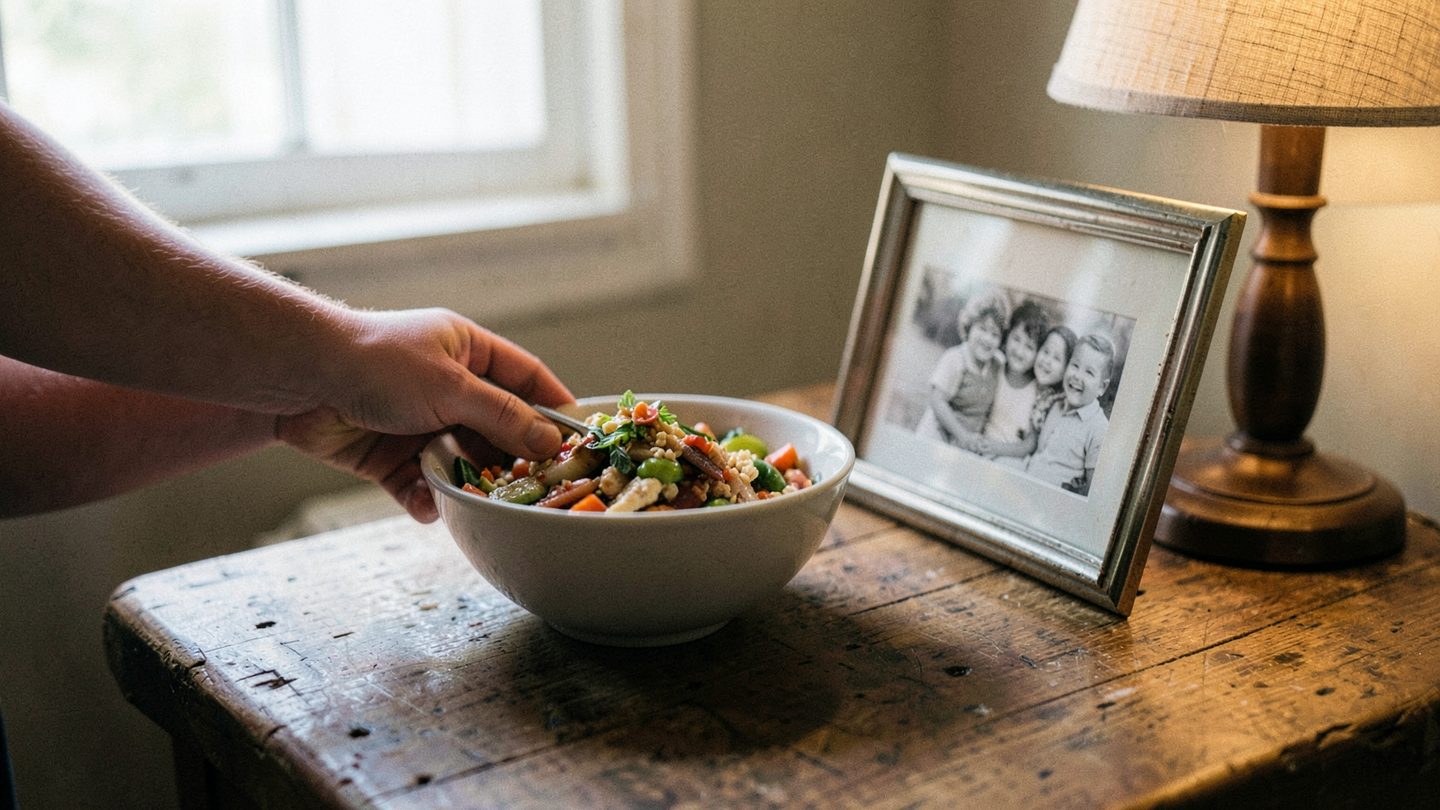
In synastry, Ceres trine the IC is the aspect people describe as instant settling. One person's Ceres — their way of feeding and supporting — lines up with the other person's IC, the chart point for home and roots. The result is care that arrives without negotiation. You know which side of the bed they sleep on before anyone tells you. You cook what they grew up eating without asking. They exhale in your kitchen at the end of a bad day and cannot fully explain why.
The IC person experiences it as being known. AstroMatrix reads the same dynamic: the Ceres person senses the IC person's need for safety and grounding with almost no explanation. That is the pleasure of the aspect, and it is real. It is also the trap — and it answers the question I opened with about why the harmonious one so often feels unseen.
Start with what the trine does not do. It does not balance anything. An easy angle means the exchange feels effortless, so neither of you audits it. One person hosts, plans, remembers the birthdays, drives to the airport at 5am. The other receives — gladly, gratefully, and passively — because nothing has signalled that receiving should turn into returning. That is the loop paying off: the harmony is genuine, and it is precisely why the imbalance never gets raised.
Here is the version of that trap most couples never name. The Ceres person carries a history of being the easy child, the reliable sibling — a role the aspect re-creates with a new audience, and one that feels like love because the dynamic is familiar. The IC person, meanwhile, has been trained by a year of frictionless care to assume their partner is fine. So nobody speaks. Watch a single week. Who initiated the practical care? Who remembered the thing? If you are the Ceres person and the answer is always you, say it plainly: I would like you to handle dinner on Thursday. Then watch. Adjustment means the trine is a bond. No adjustment, three weeks running, means the harmony is your habit and their convenience.
Comfort and safety are not the same thing, which is the second tension worth pulling apart. Comfort is the easy silence, the shared routine, the sofa that knows both your shapes. Safety is being able to say the awkward thing — I felt abandoned when you left early — and have the relationship survive the sentence intact. Synastry trines produce comfort quickly. Safety has to be built, usually through one disappointment and one repair.
You can see the difference in the moment something goes wrong. A comfort-only pairing gets quiet. Someone makes tea, changes the subject, and the unspoken thing gets filed away with the rest. A safe pairing has the hard conversation, muddles it, and comes back the next day to try again. Watch which one you two do. That answer tells you more about your future than the aspect does.
Compare Ceres contacts in one chart first. Juno trine Ceres links commitment to nurturing, so the care gets formalised — you look after each other on purpose. Chiron trine Ceres brings healing through the same channel, often with a wound underneath. Combine Ceres with the IC in synastry and the theme narrows to home specifically: who belongs, who stays, who gets the spare key.
So run the experiment honestly. Ask for the inconvenient thing. Wait a week. Watch whether the other person moves. Care that flows both directions is what this aspect promises on paper. Whether it is what you have is a question only the household can answer.
One detail decides how much weight to give the reading. The IC is a chart angle, so it needs a birth time to place. Run your synastry chart with your best-known times, then test a window either side. If Ceres stays within orb of the IC in every version, the bond is genuinely wired into the charts.